Sensory test is the foundation of how successful beverage brands turn ideas into products that consumers actually love. From the first sip to the lasting aftertaste, every beverage creates a sensory experience that shapes perception, preference, and repeat purchase.
Although taste, aroma, appearance, and mouthfeel may seem subjective, sensory testing applies structured methods and scientific controls to measure them objectively. By understanding how sensory evaluation works, beverage brands can improve product quality, reduce launch risks, and build stronger connections with consumers in an increasingly competitive market.
What Is a Sensory Test?
Sensory testing is the structured evaluation of products using human senses such as taste, aroma, texture, appearance, and sound. In the beverage industry, it is also known as sensory evaluation or sensory analysis.
Unlike casual taste testing, sensory testing follows scientific protocols to collect reliable and repeatable data. It measures how people perceive a beverage and how those perceptions influence liking, acceptance, and purchase intent.
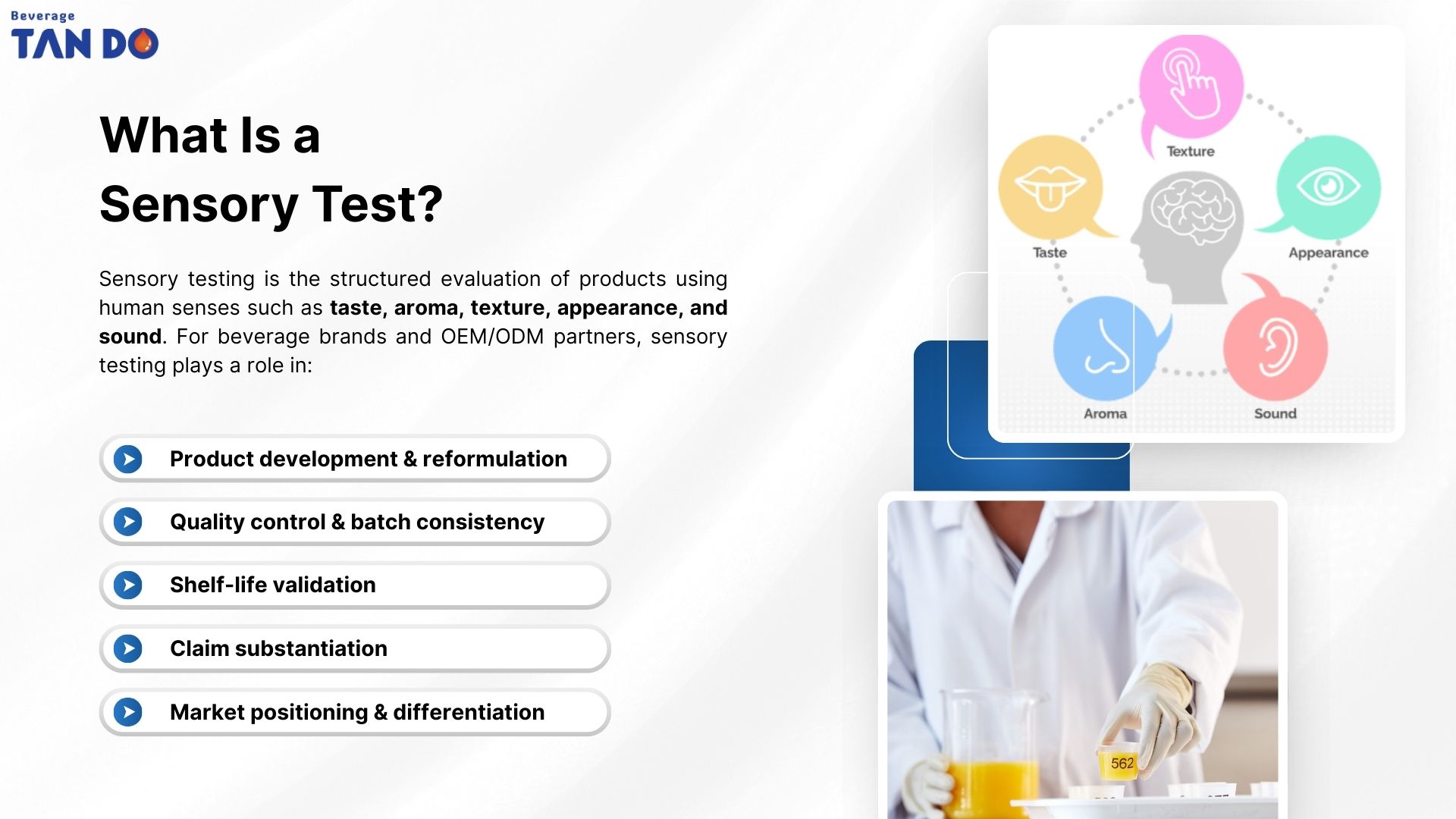
For beverage brands and OEM/ODM partners, sensory testing plays a role in:
- Product development and reformulation
- Quality control and batch consistency
- Shelf-life validation
- Claim substantiation
- Market positioning and differentiation
Why Beverage Brands Need to Understand Sensory Testing
Consumer decisions are heavily driven by sensory perception. What people taste, smell, and feel often determines whether they repurchase a product or switch to a competitor. Sensory perception is shaped by two factors:
- Physiology: how sensory organs detect stimuli
- Psychology: how the brain interprets those signals
Understanding this interaction allows brands to design beverages that:
- Meet consumer expectations
- Trigger positive emotional responses
- Perform consistently across markets and batches
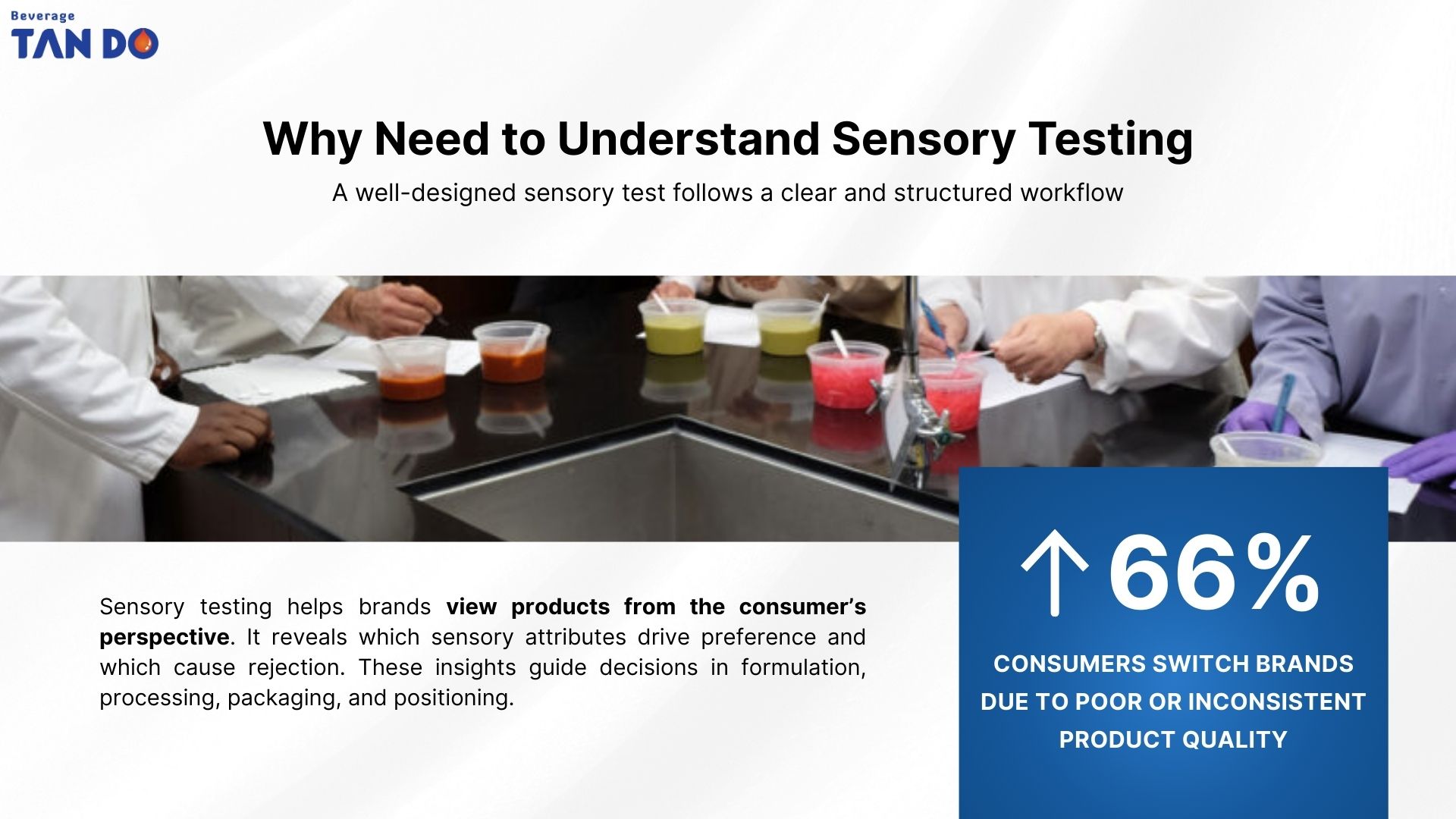
Research indicates that 66% of consumers switch brands due to poor or inconsistent product quality. In beverages, even small changes in sweetness, aroma intensity, or mouthfeel can impact acceptance.
Sensory testing helps brands view products from the consumer’s perspective. It reveals which sensory attributes drive preference and which cause rejection. These insights guide decisions in formulation, processing, packaging, and positioning.
Key Benefits of Sensory Analysis for Beverage Brands
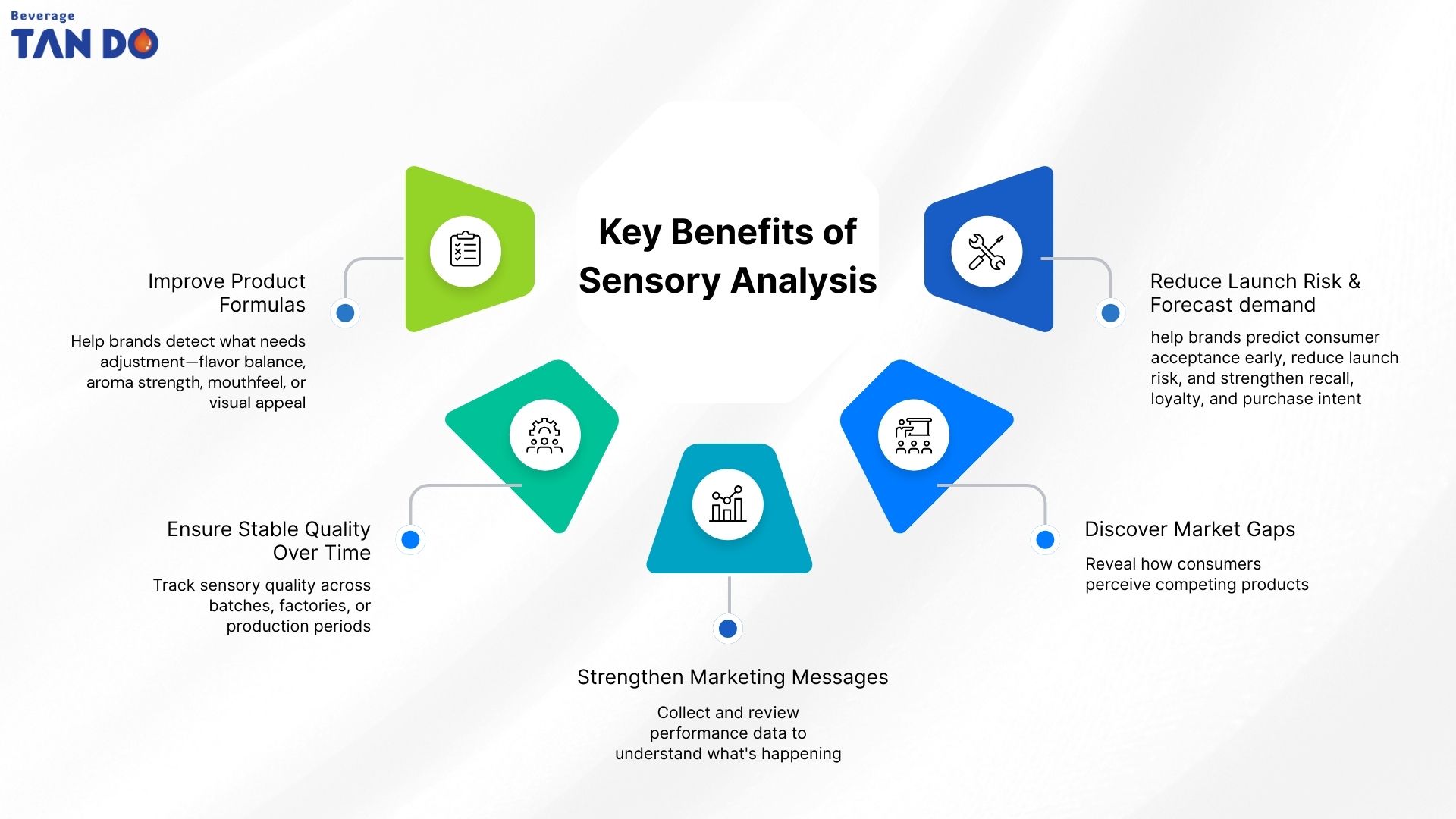
In a competitive market, brands need products that truly connect with consumers. Sensory testing provides clear, data-driven insights that help brands stand out. Key benefits include:
1.Improve Product Formulas
Sensory methods such as triangle tests and descriptive analysis help brands detect what needs adjustment—flavor balance, aroma strength, mouthfeel, or visual appeal. These insights allow R&D teams to refine formulas based on real consumer perception.
2. Ensure Stable Quality Over Time
For existing products, sensory evaluation methods can help track sensory quality across batches, factories, or production periods. This keeps the product experience consistent and aligned with what consumers expect.
3. Strengthen Marketing Messages
Consumer sensory data, including preference ranking, can support claims such as “richer taste” or “smoother texture.” This evidence makes brand communication more credible and defensible.
4. Discover Market Gaps
Sensory mapping tests can reveal how consumers perceive competing products. From there, brands can spot unmet needs and uncover new positioning opportunities within the category.
5. Reduce Launch Risk and Forecast Demand
Sensory insights help brands estimate consumer acceptance before launch or reformulation. With around 80% of new consumer packaged goods failing within the first year of market entry, early sensory feedback helps optimize production volumes and reduce commercial risk.
Beyond product testing, sensory marketing shapes how consumers feel about a brand. Elements like packaging visuals, aroma, and sound trigger emotional responses. When these cues work together, brands achieve stronger recall, deeper loyalty, and higher purchase intent.
Common Types of Sensory Evaluation
Sensory evaluation is a crucial aspect of product development and quality control in the food, beverage, and consumer goods industries. Various testing methods are employed to assess the sensory properties of products and gather valuable consumer insights.
Recent industry research shows that around 67% of companies apply sensory evaluation methods in new product development, with larger firms more likely to use these techniques to inform product decisions.
The following are some commonly employed sensory testing methods:
| Method | Objective | Typical Use Cases |
| Descriptive Analysis | Quantitative measurement of sensory attributes (appearance, aroma, flavor, texture). | Product benchmarking, reformulation studies |
| Discrimination Testing | Determines perceptible differences between samples (triangle, duo-trio, paired comparison tests). | Quality control, shelf-life validation |
| Affective/Consumer Testing | Evaluates liking, preference, or purchase intent among target consumers. | Market research, new product launches |
| Threshold Testing | Identifies detection or recognition limits for specific flavors or odors. | Ingredient substitution, contamination studies |
| Temporal Dominance of Sensations (TDS) | Tracks dominant sensations over time during consumption. | Beverage and confectionery development |
| Texture Profile Analysis (Sensory & Instrumental) | Measures parameters like hardness, cohesiveness, chewiness, and creaminess. | Dairy, snacks, bakery products |
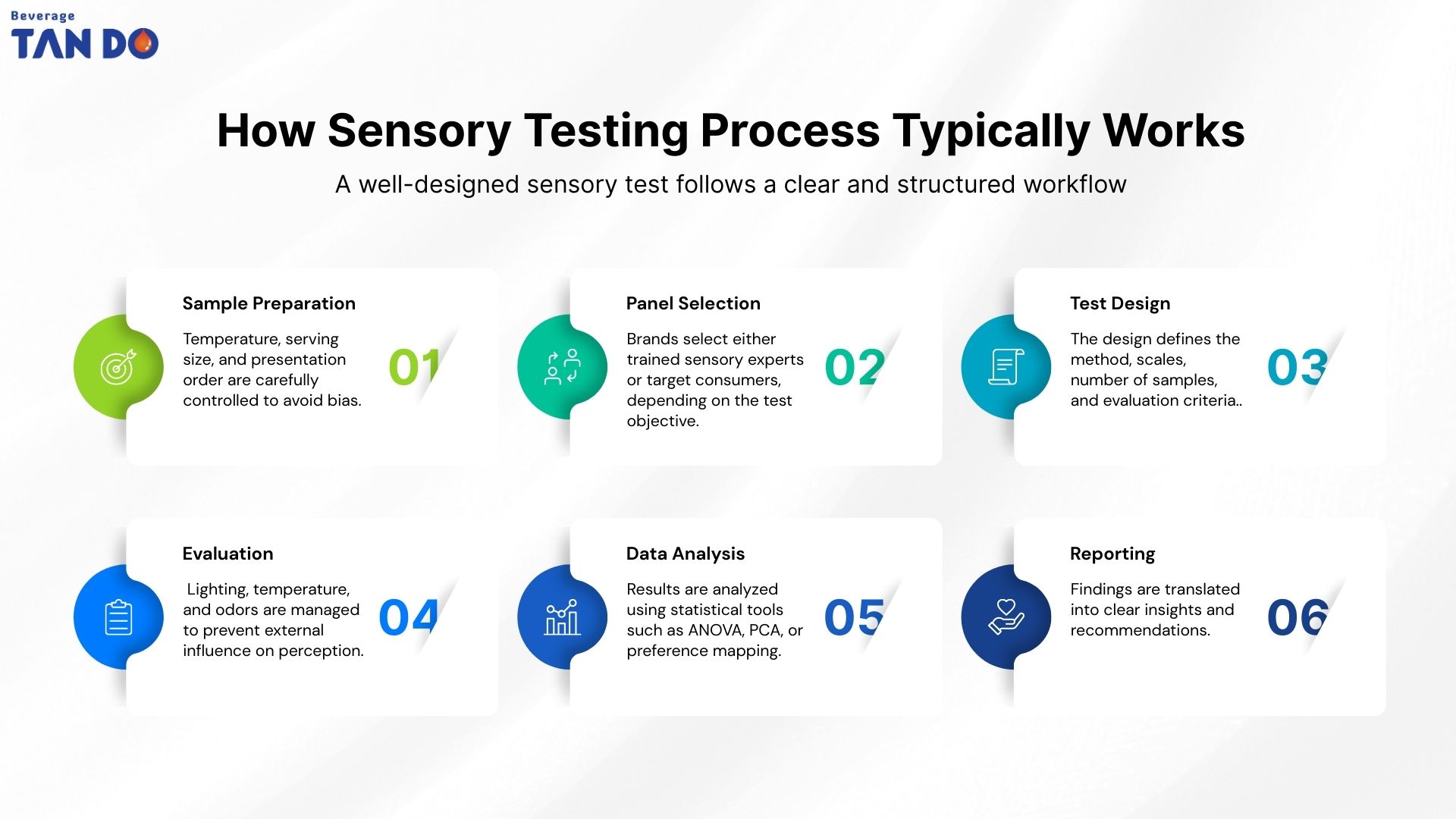
How Sensory Testing Process Typically Works
A well-designed sensory test follows a clear and structured workflow. This ensures results are reliable, unbiased, and useful for product decisions:
- Sample Preparation: Samples are prepared using standardized procedures to maintain product integrity. Temperature, serving size, and presentation order are carefully controlled to avoid bias.
- Panel Selection: Brands select either trained sensory experts or target consumers, depending on the test objective. Trained panels follow ISO-based guidelines to ensure consistent and calibrated evaluations.
- Test Design: Each test is tailored to the product type and business goal. The design defines the method, scales, number of samples, and evaluation criteria.
- Evaluation: Testing takes place in controlled environments. Lighting, temperature, and odors are managed to prevent external influence on perception.
- Data Analysis: Results are analyzed using statistical tools such as ANOVA, PCA, or preference mapping to identify meaningful patterns and differences.
- Reporting: Findings are translated into clear insights and recommendations. These reports guide formulation adjustments, quality control, and product optimization decisions.
Sensory Testing Standards and Quality Frameworks
Not all sensory tests require formal international standards. The need to apply sensory standards depends largely on the purpose of the test and how the results will be used.
For early-stage product development, internal R&D trials, or quick flavor comparisons, beverage brands often conduct in-house sensory tests without strict compliance to ISO or ASTM frameworks. In these cases, the results are used solely for internal decision-making and are not intended for external validation, regulatory review, or public claims.
However, when sensory data is used to
- Supporting product claims
- Comparing products against competitors
- Validating product quality for export or international markets
- Demonstrating compliance with buyers, retailers, or regulators
In these cases, applying recognized sensory testing standards becomes essential, as they ensure reliability, repeatability, and credibility of sensory results for commercial and regulatory use:
| Jurisdiction | Regulation/Authority | Key Standards/Guidelines | Application |
| European Union | ISO 8586:2012, ISO 13299:2016 | Guidelines for sensory assessor selection and sensory profile creation | Sensory laboratory accreditation and training |
| United States (ASTM/ISO) | ASTM E253:2022, ASTM E1871 | Methods for difference and descriptive testing | Product characterization and discrimination |
| India (FSSAI / BIS)
IS 6273 series (Parts 1, 2, 3)134 |
Food Safety and Standards (Labelling and Display) Regulations, 2020 | Ensures sensory claims (“fresh,” “natural,” “flavored”) align with product characteristics | Label verification and compliance |
| Codex Alimentarius | CAC/GL 50-2004 | General guidelines for sensory evaluation | International trade and quality validation |
When Should You Work with a Third Party?
Beverage brands can run sensory tests internally, especially during early R&D stages. However, working with a third-party provider becomes necessary when:
- Objective and independent data is required to avoid internal bias
- Compliance with international standards such as ISO or ASTM is needed
- Large-scale consumer testing is required
- Sensory data is needed to support claims, labeling, or export requirements
In these cases, specialized sensory partners help ensure accuracy, credibility, and regulatory acceptance of the results.
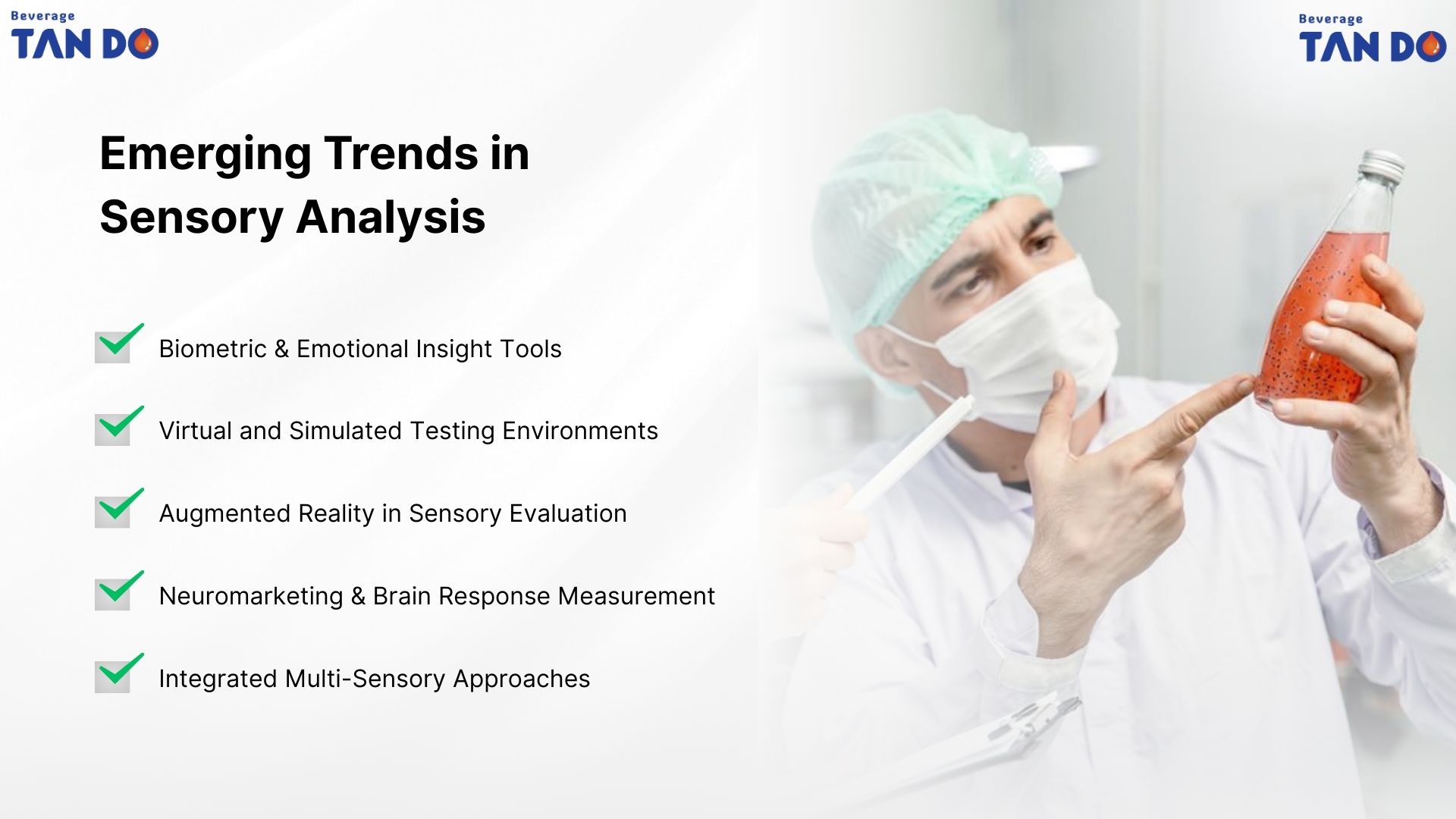
Emerging Trends in Sensory Analysis
New technologies are reshaping how brands conduct sensory tests. Below are some of the key innovations driving the next phase of sensory evaluation.
Biometric and Emotional Insight Tools
Biometric technologies now help quantify emotional and physical reactions to sensory stimuli. Methods such as facial expression tracking, eye movement analysis, and galvanic skin response (GSR) measurement uncover subconscious reactions that consumers may not express verbally. These tools help brands understand the emotional triggers behind product preference.
Virtual and Simulated Testing Environments
Virtual reality (VR) enables highly realistic product testing without relying solely on physical samples. Participants can experience products in different usage scenarios or environments, providing feedback that reflects real-life consumption contexts while reducing development time and costs.
Augmented Reality in Sensory Evaluation
Augmented reality (AR) enhances sensory testing by digitally altering product attributes such as packaging visuals, color, or surface texture. This allows brands to test multiple design or formulation variations quickly, without producing multiple physical prototypes.
Neuromarketing and Brain Response Measurement
Advanced neuromarketing tools like EEG and fMRI measure brain activity during sensory exposure. These techniques reveal how the brain processes sensory cues, offering deeper insight into attention, emotion, and decision-making mechanisms linked to product experience.
Integrated Multi-Sensory Approaches
Modern sensory research increasingly considers how multiple senses interact. By combining visual, auditory, olfactory, gustatory, and tactile inputs, brands can evaluate the full consumption experience and optimize products to feel more natural, engaging, and memorable.
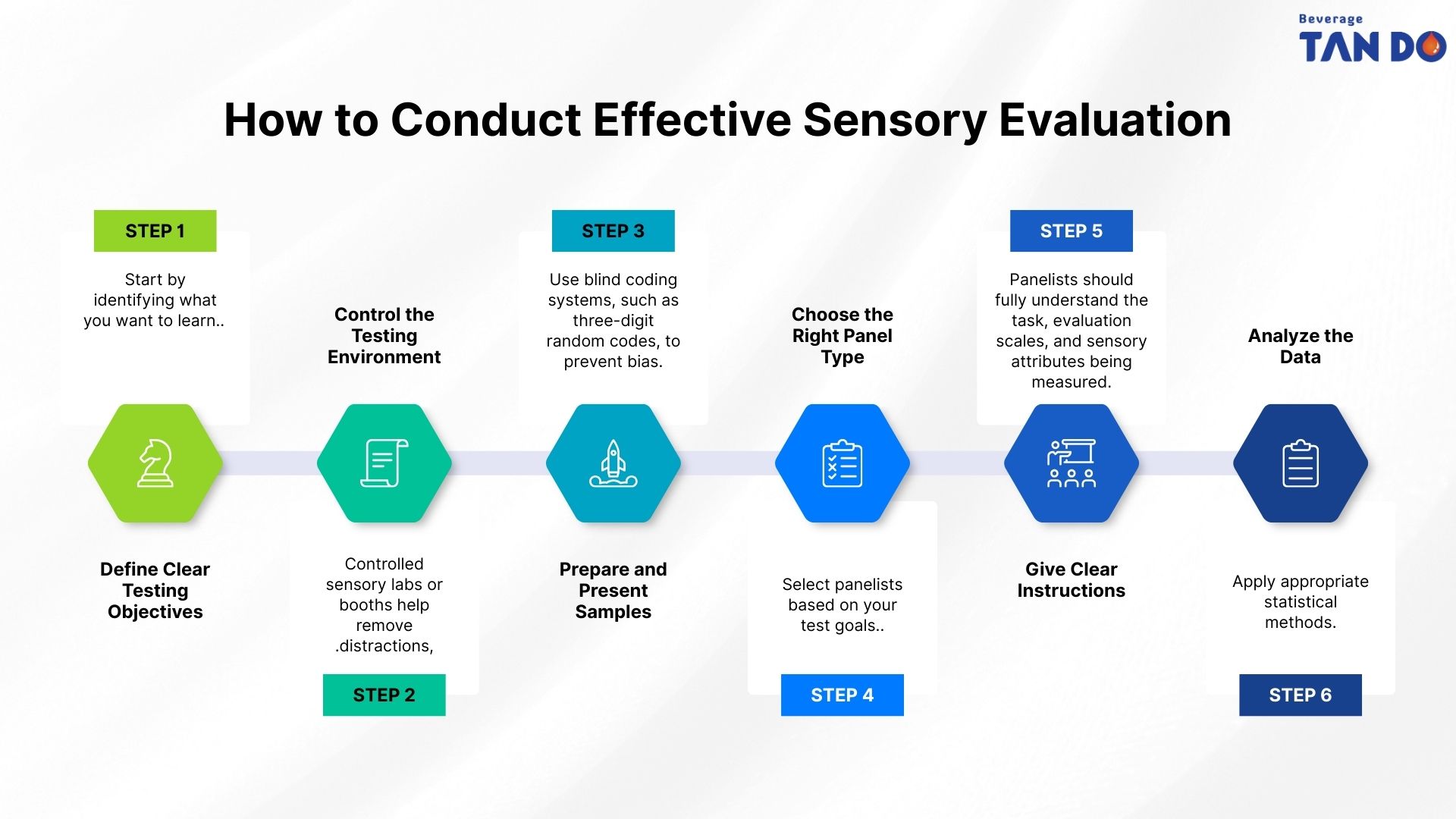
How to Conduct Effective Sensory Evaluation
1. Define Clear Testing Objectives
Start by identifying what you want to learn. Are you comparing two formulas, validating batch consistency, or measuring consumer liking? Clear objectives help determine the most suitable sensory method and reduce unnecessary testing costs.
2. Control the Testing Environment
Conduct tests in environments that minimize external influence. Controlled sensory labs or booths help remove distractions such as background noise, strong odors, or visual cues. Standardizing temperature and lighting also improves data consistency.
3. Prepare and Present Samples Carefully
Sample preparation plays a critical role in sensory accuracy. Use blind coding systems, such as three-digit random codes, to prevent bias. Keep serving order, portion size, and instructions consistent for all participants.
4. Choose the Right Panel Type
Select panelists based on your test goals. Trained descriptive panels work best for analytical tests that measure sensory attributes. For acceptance or preference studies, recruit consumers who represent your target market.
5. Give Clear and Simple Instructions
Panelists should fully understand the task, evaluation scales, and sensory attributes being measured. Clear guidance ensures consistent interpretation and reduces variability in responses.
6. Analyze Data with the Right Tools
Apply appropriate statistical methods such as ANOVA, multivariate analysis, or preference mapping. These techniques help identify meaningful patterns, differences, and drivers of liking.
Ethical Considerations in Sensory Test
Sensory testing delivers meaningful insights into consumer behavior, but brands must manage the process with strong ethical standards. Responsible testing protects participants and ensures the credibility of results. Core ethical principles include:
Informed Participation (Autonomy)
Brands should secure voluntary consent from all participants. Before testing, participants must clearly understand the study’s purpose, procedures, potential risks or benefits, and how their information will remain confidential.
Participant Safety and Care (Beneficence)
Testing programs should prioritize participant well-being. This includes reducing physical or emotional risk, respecting dietary needs, and clearly communicating any allergens or sensitive ingredients.
Fairness and Representation (Justice)
Participant recruitment should be unbiased and representative of the target audience. Compensation must be fair and transparent for all participants.
Data Protection and Confidentiality (Privacy)
Brands must implement strong data security measures, anonymize participant information, and comply with relevant data protection regulations.
Independent ethics committees or review boards can help verify that study designs, consent processes, and participant communications meet ethical and legal requirements.
When NOT to Do Sensory Test
Sensory testing is powerful, but it is not always the right tool. In some situations, running a sensory test can waste time, money, or lead to misleading results.
- When the formula is not yet stable: If the recipe still changes from batch to batch, sensory results will not be reliable. Sensory testing works best once the core formulation is fixed.
- When samples are not production-ready: Lab samples often taste different from factory-scale products. Testing too early can give false feedback that does not reflect the final product.
- When you only need basic quality checks: For simple pass/fail checks (color, Brix, pH, defects), instrumental or QC tests are faster and more cost-effective than sensory panels.
- When the objective is not clear: Running a sensory test without a clear question leads to unusable data. If you cannot define what decision the results will support, do not test yet.
- When the target consumer is undefined: Consumer tests require a clear target audience. Without it, preference data has little value and may point the product in the wrong direction.
- When time or budget is extremely limited: Poorly designed sensory tests create more confusion than insight. If resources are insufficient, it is better to delay testing than run a weak study.
Conclusion
Sensory test helps beverage brands turn consumer perception into clear product decisions. By evaluating taste, aroma, texture, and appearance in a structured way, brands can refine formulations, maintain consistent quality, validate claims, and reduce market risk.
Whether conducted internally for R&D or through third-party partners for compliance and export, sensory evaluation provides reliable insights that support long-term brand growth. As technology advances, sensory testing will continue to evolve—becoming faster, more data-driven, and more closely connected to real consumer experiences.
You may also like:
Top Trends for Private Label Beverages in 2026
Beverage Development 2026: What’s Really New in the Beverage Industry?
Leave a Reply